Start with users, end with impact: co-designing DestinE services
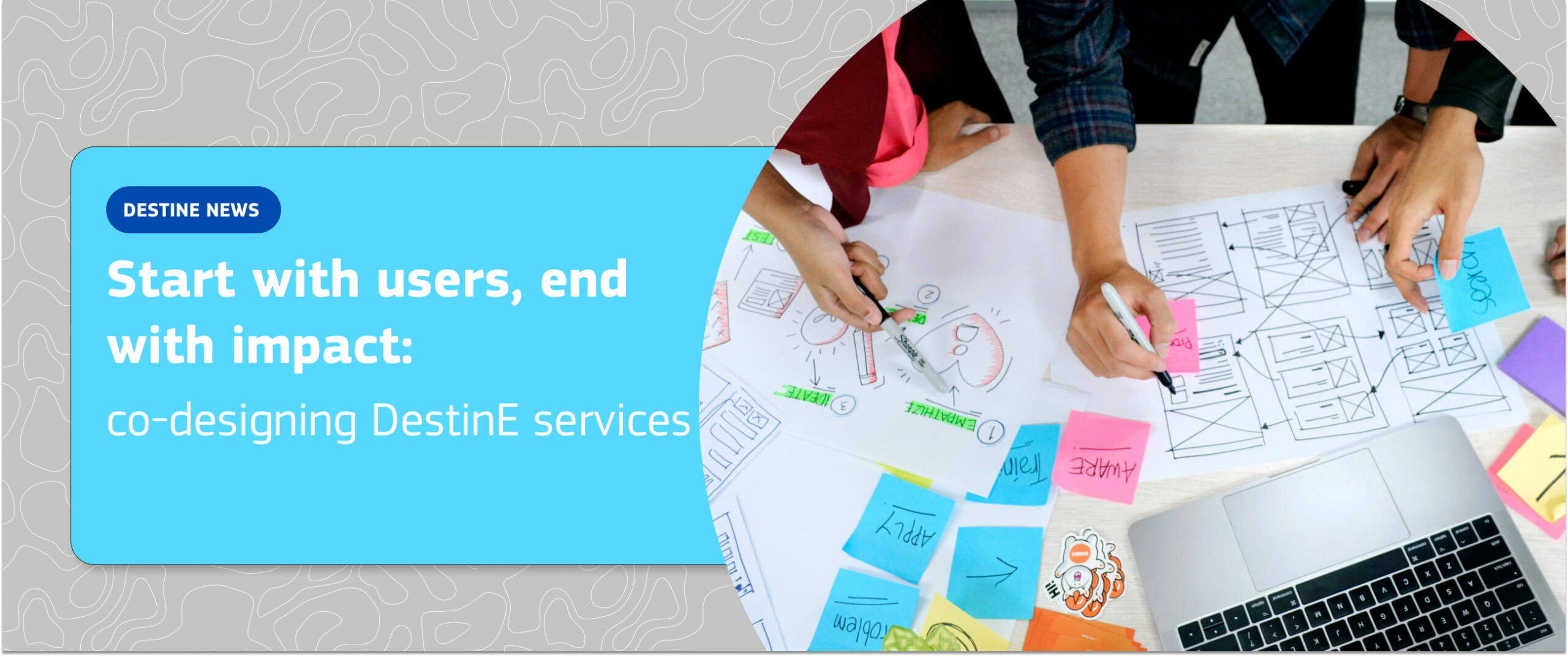
Designing an Earth observation (EO) service is rarely just a data problem. More often than not, service providers have the technical expertise, infrastructure and access to powerful EO data – yet still struggle to create services that users understand, trust and actually use.
To help close this gap for services on the Destination Earth (DestinE) Platform, DestinE teams released a co-design workflow that is now available to all.
A difficult quest
Creating a new product or service isn’t easy. There’s the challenge of doing something genuinely useful for clients or users. The task of ensuring it runs smoothly. And, of course, the ongoing pressure to maintain it over time so it doesn’t become obsolete.
Designing EO-data-based services can be even more challenging. EO data can help many different users, from farmers managing crop yields to urban planners mapping green spaces. Yet many potential users aren’t familiar with Earth observation data. In a survey focused on the water quality management sector, for example, many respondents said they struggled to access and interpret EO data.
“We know creating services from scratch is difficult, especially on the DestinE PlatformSelf-standing DestinE system component, interfacing with the More, which is still relatively new and unfamiliar,” says Franka Kunz, DestinE Earth Science Model Engineer. “We wanted to help companies and organisations create services for DestinE users, so we funded the development of this toolkit to guide them through the process.”
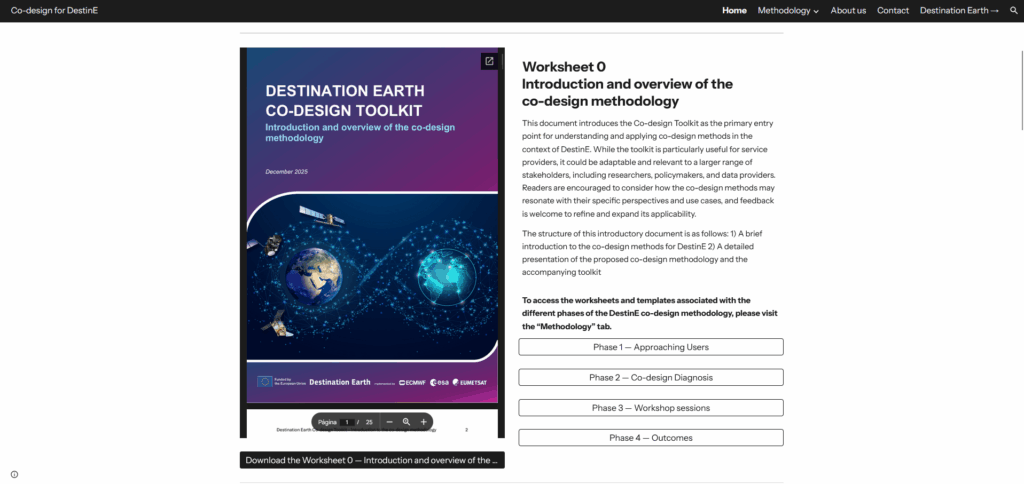
Co-designing services, step by step
Co-designCoordinated definition and implementation of a DestinE techn More is a methodology where users create services with service developers. This leads to robust, practical services that last and that users can rely on in their daily work.
Although this approach is well established in other industries, it has not yet been widely adopted in Earth observation. The new DestinE co-design toolkit aims to change that. Through an interactive website, it guides service providers step by step through four key stages of co-design.
Step one involves approaching users. Providers need to identify and connect with potential users, build strong relationships with the most promising ones, and work with them to design and launch joint co-creation activities.
“A great idea isn’t enough. You need a clear mandate, you have to define your ‘grand challenge’ and the themes you plan to engage with. That’s what helps you map the ecosystem and identify – and connect with – potential users,” explains Nicolas Fichaux from ARMINES/Mines Paris PSL, who worked on the toolkit.
Step two involves diagnosing needs. ServiceRegular provision of technological capabilities, resources, More providers should examine the technical systems they already have and work with their users to create an action plan. This plan should tackle any gaps and anticipate potential challenges. It’s also the right time to clarify who will sit at the co-design table and map how these people relate to one another.
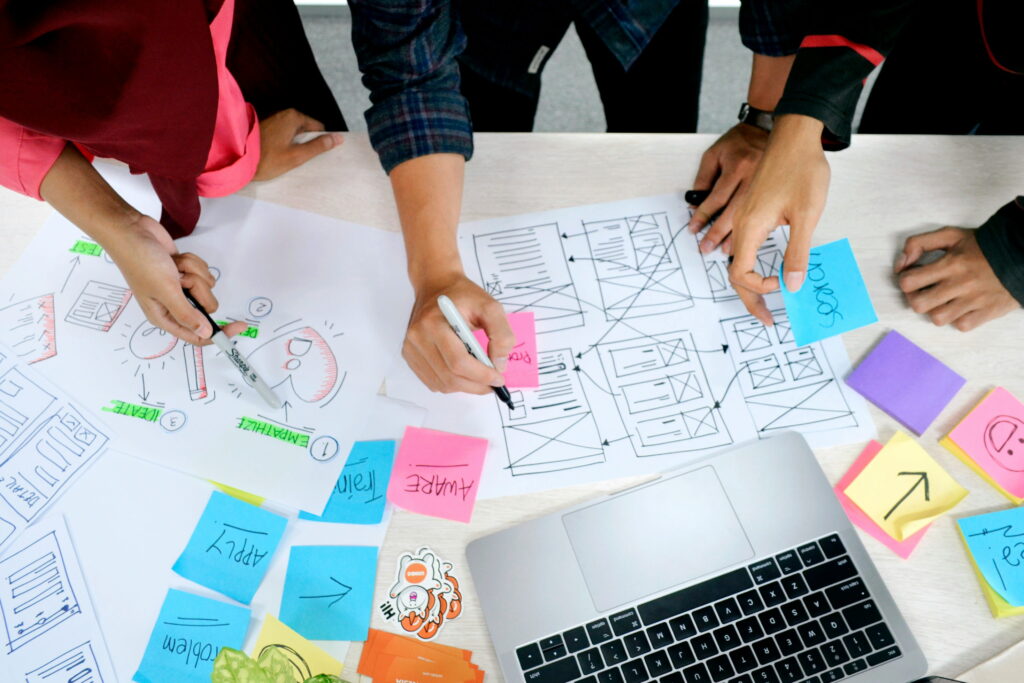
The third phase focuses on co-design workshops. With users clearly identified, it’s time to sit down with them and design the service together. These workshops are a good opportunity to ask questions, share ideas, and give each other feedback.
Finally, step four focuses on formalising the outcomes of the co-design journey.
“Let’s say that by phase four, you have a service that meets your users’ needs for the next six months, but what about a year from now? Or two years?” asks Alexandre Azoulay, from ARMINES/Mines Paris PSL. “ServiceRegular provision of technological capabilities, resources, More providers and users need to look ahead together. It can take different forms depending on the timeframe: short-term joint exploration, mid-term commercial agreements, and even longer-term, more ambitious research projects.”
Opportunities for future collaboration are crucial. ServiceRegular provision of technological capabilities, resources, More providers should document them clearly and discuss them with users. Doing so helps keep users engaged, which ultimately makes the service useful and relevant over the long term.
Everyone working to create EO services knows how challenging this process can be. It’s complex, and it demands time, funding, and organisational skills to keep everything running smoothly. But all this effort pays off in the end: it results in services that genuinely meet users’ needs and support them where they are.
“Creating EO services is challenging, there’s no denying that,” says Malik Terfous, a researcher from ARMINES/Mines Paris PSL who also worked on the toolkit. “But co-design is the way to ensure DestinE delivers services that work today and continue to meet real needs, year after year.”
The DestinE co-design toolkit is available to all. MINES Paris PSL, the research team behind the toolkit, has also hosted webinars that are free to watch.
Finally, if you are a user or service provider and have questions about the co-design methodology, feel free to contact the DestinE team by filling out this form.